 EN

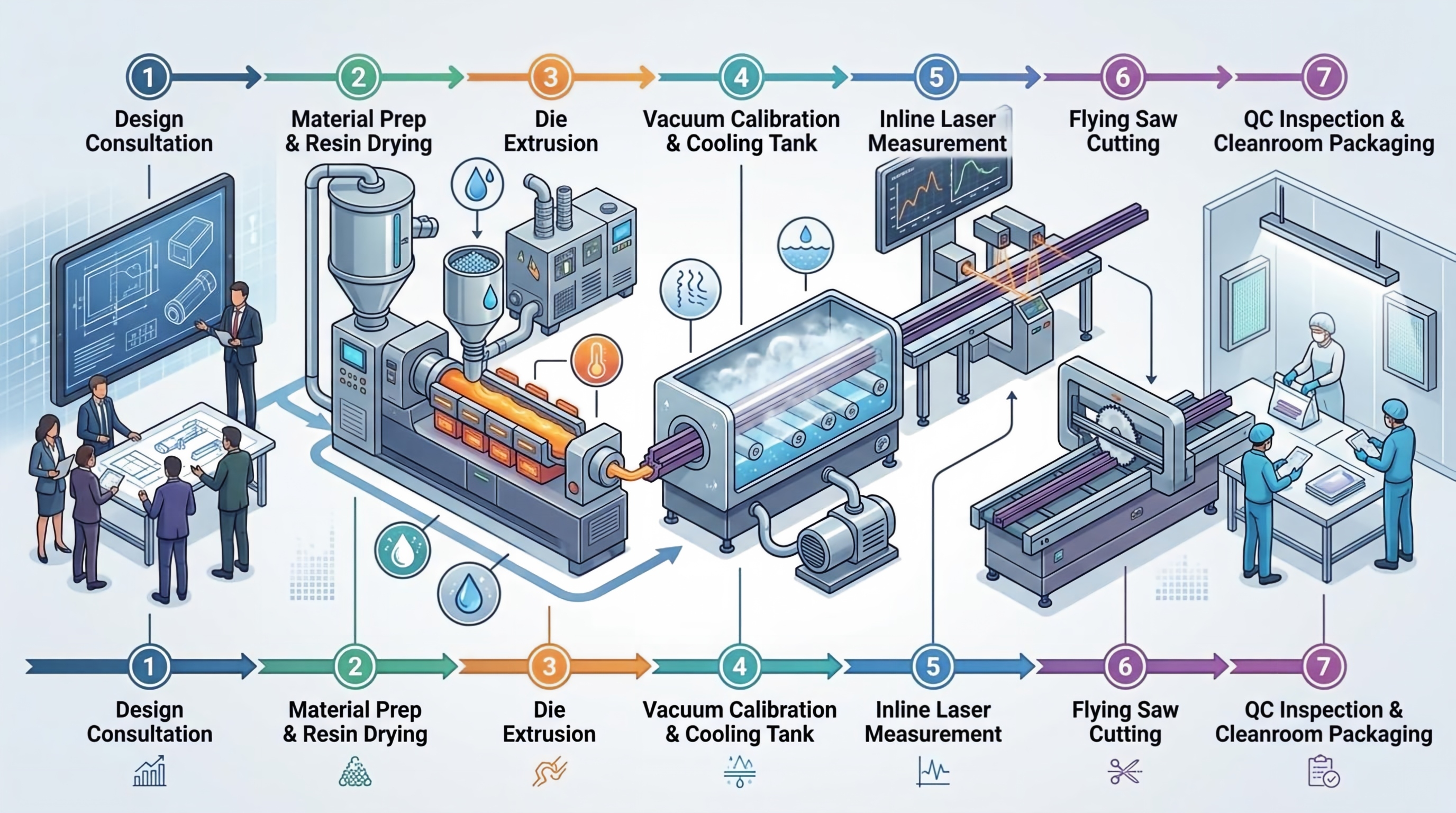
Custom Plastic Extrusion: What Buyers Should Know Before Requesting a Quote
Custom plastic extrusion is a practical solution for businesses that need plastic tubes, channels, trims, covers, and profiles in specific shapes and dimensions. Unlike standard products, custom plastic extrusion is developed around the requirements of a particular application.
Before requesting a quote, buyers should understand the key factors that affect product design, material selection, tooling costs, production quantities, and delivery. Preparing the right information can help manufacturers evaluate a project more accurately and reduce unnecessary delays.
1. Define Your Product Application
The first step in a custom plastic extrusion project is to explain how and where the product will be used.
Consider these questions:
-
Will the product be used indoors or outdoors?
-
Will it be exposed to sunlight, moisture, chemicals, or high temperatures?
-
Does it need to be transparent, flexible, rigid, or impact-resistant?
-
Is it designed for protection, decoration, insulation, or structural support?
These details help a manufacturer recommend suitable materials and production methods. For example, a transparent protective cover may require different properties from a flexible sealing profile.
A clear application description gives your custom plastic extrusion supplier a better understanding of the project from the beginning.
2. Select the Right Plastic Material
Material selection directly affects product performance, appearance, durability, and cost. Common materials used in custom plastic extrusion include:
| Material | Main Characteristics | Typical Applications |
|---|---|---|
| PVC | Versatile; available in rigid and flexible grades | Channels, trims, protective profiles |
| ABS | Good impact performance and surface finish | Equipment housings, functional profiles |
| PC | High impact resistance and transparency | Protective covers, transparent tubes |
| PMMA | Excellent optical clarity and weatherability | Lighting profiles, display components |
| PP | Lightweight and good chemical resistance | Industrial components |
| PE | Good chemical resistance and flexibility, depending on grade | Tubes, pipes, protective parts |
The best material depends on the actual working environment and performance requirements. Buyers should not select a resin based on price alone.
If you are unsure which material is suitable, provide the application details and ask your custom plastic extrusion manufacturer for recommendations.
3. Prepare Drawings and Dimensions
A technical drawing is one of the most important documents for obtaining an accurate quotation.
Ideally, provide a 2D engineering drawing or 3D CAD file showing:
-
Cross-sectional shape
-
Overall width and height
-
Wall thickness
-
Internal cavities and special features
-
Dimensional tolerances
-
Required product length
For custom plastic extrusion, the cross-section is especially important because it determines the die design and influences material flow during production.
If you do not have a finalized drawing, an initial sketch with key dimensions or a physical sample can help the manufacturer assess feasibility. Confirming the specifications early can also reduce design changes later.
4. Understand Tooling Costs
Most custom plastic extrusion projects require a specially designed die to produce the required cross-section.
Tooling costs depend on profile complexity, product dimensions, material characteristics, dimensional accuracy, and die construction.
A simple solid profile may require relatively straightforward tooling, while hollow sections or multi-channel designs can involve more complex engineering.
Before placing an order, ask your supplier:
-
Is the tooling cost quoted separately?
-
Is it a one-time charge?
-
Who owns the tooling after payment?
-
Are future modifications charged separately?
Understanding these points helps buyers compare quotations more fairly and avoid unexpected costs.
5. Confirm MOQ, Quantity and Lead Time
Order quantity has a direct influence on unit pricing. A custom plastic extrusion manufacturer may need to consider raw material purchasing, production setup, tooling preparation, and minimum production runs.
When requesting a quotation, specify your estimated quantity, initial trial order, and expected annual demand if available.
Also ask the supplier to separate the estimated lead times for tooling, sampling, and mass production. This makes project planning easier, particularly when the product has a fixed launch date.
6. Agree on Quality and Packaging Requirements
Before mass production, buyers and manufacturers should agree on the inspection criteria for the custom plastic extrusion.
Important requirements may include:
-
Dimensional tolerances and wall thickness
-
Color consistency and surface appearance
-
Transparency, where applicable
-
Mechanical performance
-
Packaging and transportation protection
For repeat orders, an approved sample and documented specifications can help maintain consistency between batches.
Packaging should also be discussed early. Depending on the product, options may include protective film, individual sleeves, PE bags, export cartons, or pallet packing. Long and transparent profiles may need additional protection against scratches and deformation.
7. What to Include in Your RFQ
To receive a more accurate quotation, prepare the following information before contacting a custom plastic extrusion supplier:
-
Product application and operating environment
-
Preferred material or required performance
-
Product drawing, CAD file, or physical sample
-
Dimensions and tolerances
-
Color and surface finish
-
Estimated order quantity
-
Required sample and delivery schedule
-
Packaging requirements
-
Destination country or shipping port
The more complete your information is, the easier it becomes to evaluate tooling, material costs, production feasibility, and delivery arrangements.
Work with LEZ on Your Custom Plastic Extrusion Project
Choosing a supplier involves more than comparing unit prices. Engineering communication, material recommendations, tooling experience, production consistency, and packaging arrangements all contribute to a successful project.
LEZPC welcomes inquiries for custom plastic extrusion products based on customer drawings, samples, dimensions, materials, and application requirements.
Whether you are developing a new product or sourcing a manufacturing partner for an existing design, share your specifications with our team to discuss a suitable solution.
Ready to request a quote? Contact LEZPC and send us your drawing, sample, or initial product requirements.
Table of Contents
- 1. Define Your Product Application
- 2. Select the Right Plastic Material
- 3. Prepare Drawings and Dimensions
- 4. Understand Tooling Costs
- 5. Confirm MOQ, Quantity and Lead Time
- 6. Agree on Quality and Packaging Requirements
- 7. What to Include in Your RFQ
- Work with LEZ on Your Custom Plastic Extrusion Project