 EN
EN

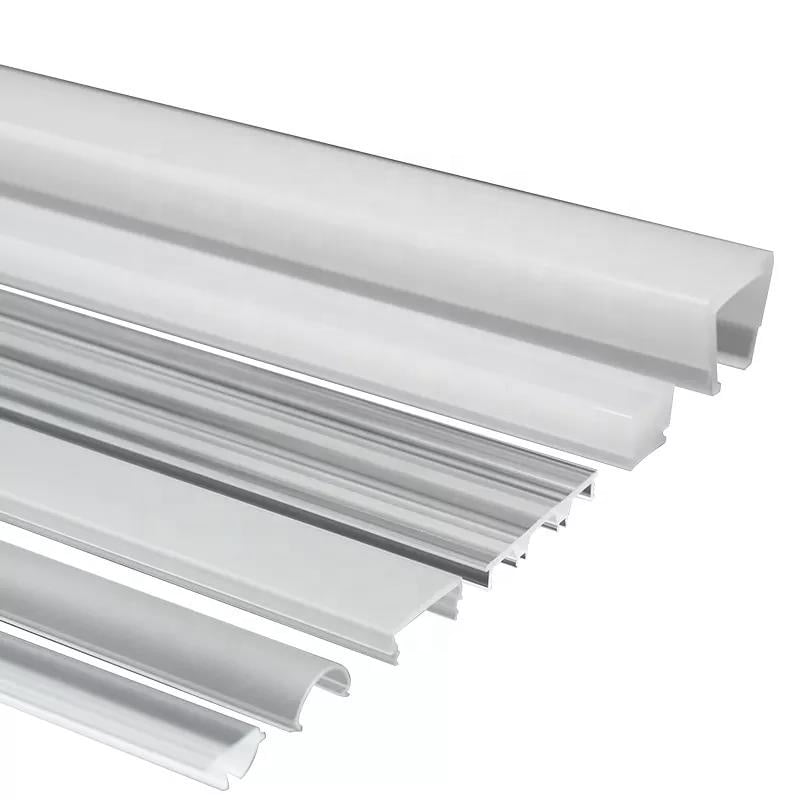
Precision in Lighting: The Art and Science of PC Lamp Shade Extrusion Processing
In the modern lighting industry, the PC (Polycarbonate) lamp shade has become the gold standard for durability, safety, and optical performance. Unlike traditional glass or cheaper plastics, high-quality PC profiles offer a unique combination of high light transmission and extreme impact resistance.
But how are these precision components manufactured? This guide explores the sophisticated processing of PC lamp shades and why material science is the key to perfect illumination.
1. Selecting the Right Material: Optical-Grade PC
The journey begins with the selection of raw materials. For lighting applications, optical-grade Polycarbonate is required.
- Light Diffusion Technology: To prevent the "hot spot" effect caused by high-intensity LEDs, specialized light diffusion agents (beads) are integrated into the PC resin. These beads scatter light internally, ensuring a soft, uniform glow across the entire surface.
- UV Stabilization: To prevent yellowing and embrittlement over time, especially in outdoor or high-heat environments, UV stabilizers are added to the formulation.
2. The Precision Extrusion Process
The primary method for producing long lamp shade profiles is continuous extrusion. This process requires extreme precision in temperature and pressure management.
- Melting and Homogenization: The PC resin is heated to approximately 280°C - 320°C. Maintaining a stable temperature is critical to avoid material degradation or "black spots" in the final product.
- Die Design: The custom-engineered die gives the profile its specific shape (U-shape, O-shape, or complex irregular geometries).
- Cooling and Calibration: As the profile exits the die, it passes through a vacuum calibrator and a water cooling tank to set its shape and dimensions with sub-millimeter accuracy.
3. Surface Finish and Quality Control
A high-quality PC lamp shade must be free of visual defects. Our processing lines include rigorous inspection for:
- Optical Consistency: Ensuring the diffusion rate and light transmission are uniform across the batch.
- Dimensional Stability: Verifying that the thickness and width meet tight industrial tolerances for easy assembly.
- Surface Clarity: Eliminating die lines, bubbles, or contaminants that could affect the light path.
4. Why Choose Extruded PC Profiles?
Compared to injection-molded parts, extruded profiles allow for infinite lengths and uniform wall thickness, making them ideal for linear lighting, architectural accents, and industrial workspace illumination.
Key Performance Benefits:
- Impact Strength: Virtually unbreakable (250 times stronger than glass).
- Flame Retardancy: Can be formulated to meet UL94 V-0 or V-2 safety standards.
- Thermal Stability: Maintains its shape even in high-wattage LED systems.